

The Challenges We Address
Operational ROI & Cost Efficiency
Minimize overhead costs associated with traditional training. Our scalable digital twins and virtual experiences deliver maximum value by reducing travel, instructor fees, and material consumption.
Knowledge Transfer
Prevent the "Silver Tsunami" from affecting your line. Capture and digitize institutional knowledge and subject matter expertise (SME) into repeatable modules before it leaves the workforce.
High-Risk Safety Compliance
Mitigate OSHA and regulatory risks by providing a zero-harm, repeatable environment. Employees master critical safety procedures and emergency response without real-world physical danger.
Standardized Technical Training
Eliminate inconsistent training protocols. Ensure every technician receives the same high-quality, standardized interactive instruction, ensuring uniform skill mastery across the entire enterprise.
Remote Workforce Accessibility
Overcome geographic dispersion by making immersive training accessible to remote teams. Our cloud-deployed virtual modules ensure your staff is "field-ready," regardless of their physical location.
Machinery Maintenance & Downtime Prevention
Reduce the risk of costly equipment damage and unplanned downtime. Give operators a safe space to practice complex machinery startup and maintenance troubleshooting in a high-fidelity virtual setting.

Our Solution
VITE
[Virtual Interactive Training Experiences]
VITE Immersive Technical Training & Digital Twin Solutions transforms traditional training with high-fidelity virtual environments where your workforce learns by doing. By bridging the gap between theory and floor mastery, we provide a virtual environment to safely practice high-stakes procedures with zero physical risk.
More than e-learning, immersive technical training is a performance accelerator that delivers real-world competency without the consequences of downtime or material waste. We ensure your team is floor-ready and productive from day one.
Real-World Skills: Interactive Training Across Key Industries

Risk-Free Practice: Enables trainees to learn the operation of highly specialized and expensive machinery without the risk of costly material waste, equipment damage, or personal injury.
Reduced Downtime: Operators can practice fault diagnosis and recovery procedures in the simulator, leading to faster troubleshooting and less production downtime in the real facility.
Precision & Efficiency: Step-by-step visual instructions directly onto the work surface, dramatically reducing assembly errors and increasing speed for complex tasks.
Standardization: Ensures every technician follows the precise procedure required by the manufacturer, leading to consistent product quality and easier compliance.
Improved Flow: Allows engineers to test changes to the production process, workflow, or material handling logistics in a digital environment to optimize efficiency before expensive physical reorganization is committed.
Design Review Efficiency: Allows cross-functional teams to conduct real-time collaborative walkthroughs of new equipment or facilities before construction. Test changes to the production process, workflow, or material handling logistics in a Digital Twin environment to optimize efficiency.

Safety: Enables workers to practice operating expensive and highly dangerous heavy equipment (cranes, excavators) until proficiency is reached, drastically reducing accidents and fatalities on real worksites.
Next-Gen Workforce Attraction: Utilizes gamification mechanics to create engaging, competitive learning environments. This serves as a powerful tool to attract, screen, and rapidly onboard the next generation of talent into skilled trades.
Asset Protection: Minimizes risk of damage to valuable equipment and infrastructure during the learning process.
Faster Diagnosis & Repair: Interactive guidance allows technicians to see digital schematics and diagnostic information overlaid directly onto physical equipment, making complex repairs faster and more accurate.
Error Reduction: Provides a risk-free environment to practice electrical lockout/tagout procedures and fire-code compliant installations.
High-Risk Preparedness: Provides realistic practice for safety procedures and emergency response in inherently dangerous environments (e.g., tunnel collapse, blast zone evacuation), which is impossible to train for in the real world.
Equipment Mastery: Allows new operators to gain competency on specialized, extraction machinery without impacting production or risking equipment damage.

Safety & Cost Savings: Enables mechanics to perform complex, irreversible maintenance and high-stakes procedures in a zero-risk environment, preventing damage to real, expensive aircraft and avoiding life-threatening mistakes.
Efficiency & Accuracy: Digital guides streamline assembly, guiding technicians through precise, sequential steps, which significantly reduces human error and saves time during manufacturing and repair.
Operational Precision: Digital training tools ensure consistent adherence to protocols for precise cargo loading, aircraft positioning, and pre-flight checks, improving turnaround times and preventing costly delays due to errors.
Design Validation: Allows engineers and maintainers to validate the accessibility and assembly sequence of complex systems in a virtual environment, minimizing costly rework during physical production.

Safety and Compliance: Provides a risk-free way to practice adherence to complex signaling and speed restrictions; allows engineers to handle unforeseen track hazards and system failures without disrupting real service.
Faster Maintenance: Digital tools aid in quickly diagnosing and following the correct procedures for engine repair and maintenance.
Reduced Errors: Gamification and immediate feedback reduce mistakes in operating complex inventory management systems and prevent mis-shipments.
Enhanced Public Communication: Uses interactive scenarios to train drivers on professional interaction with the public, customers, and law enforcement during roadside stops, deliveries, or accidents.

Process Reliability: Allows operators to practice complex, sequential protocols like plant start-up, load changes, and shutdown in a virtual environment. This practice drastically reduces the risk of operational errors that could lead to costly downtime or equipment failure.
Risk Management: Prepares personnel to coordinate a rapid, effective emergency response to critical failures, such as gas leaks, fires, or nuclear incidents, without placing the actual facility at risk.
Workforce Safety: Enables technicians to practice high-risk maintenance procedures on live or high-voltage equipment safely, reinforcing critical safety clearances and lockout/tagout protocols.
Faster Diagnosis: Digital models provide just-in-time guidance and diagnostic aids, helping field workers quickly and accurately identify and repair complex equipment malfunctions.

Reduced Risk & Cost: Lets deckhands and engineering staff safely rehearse demanding tasks like deck equipment operation, machinery checks, and emergency response procedures, all without risking damage to equipment, cargo, or vessel systems.
Competency Under Stress: Builds quick decision-making and team coordination skills essential for safety during voyages and emergencies.
Operational Reliability: Enables engineers to practice troubleshooting and repair of complex engine failures and system malfunctions, which minimizes costly downtime and prevents breakdowns at sea.
Safety: Reinforces strict adherence to operational procedures across both sea and ground environments, helping crews perform critical tasks safely and consistently.
Damage Prevention: Trains crew on proper cargo lashing, stability calculations, and container loading to prevent shifting cargo and structural damage, directly safeguarding the vessel and its contents.
Compliance: Ensures personnel are proficient in handling specialized or hazardous cargo according to international regulations.

Improved Decision-Making: Trains teams to handle time-critical infrastructure failures (e.g., HVAC, power, critical equipment) by practicing rapid failure isolation, cross-functional communication, and coordinated emergency repair under strict time constraints.
Standardization: Ensures staff rigorously follow all current regulatory and safety protocols (Joint Commission ,ISO ,NFPA life codes) for all preventative and corrective maintenance operations.
Enhanced Critical Thinking: Develops the ability to swiftly and accurately interpret technical data (e.g., control logs, error codes, diagnostic reports) and equipment history to formulate precise diagnoses and repair strategies.
Empathy and Communication: Provides a safe environment to practice high-stakes technical handoffs, document procedures clearly, and effectively communicate downtime and status updates with clinical teams and external vendors.

Key Benefits
Every experience we build is designed to deliver a tangible business advantage, from increased productivity to a more skilled and confident workforce.
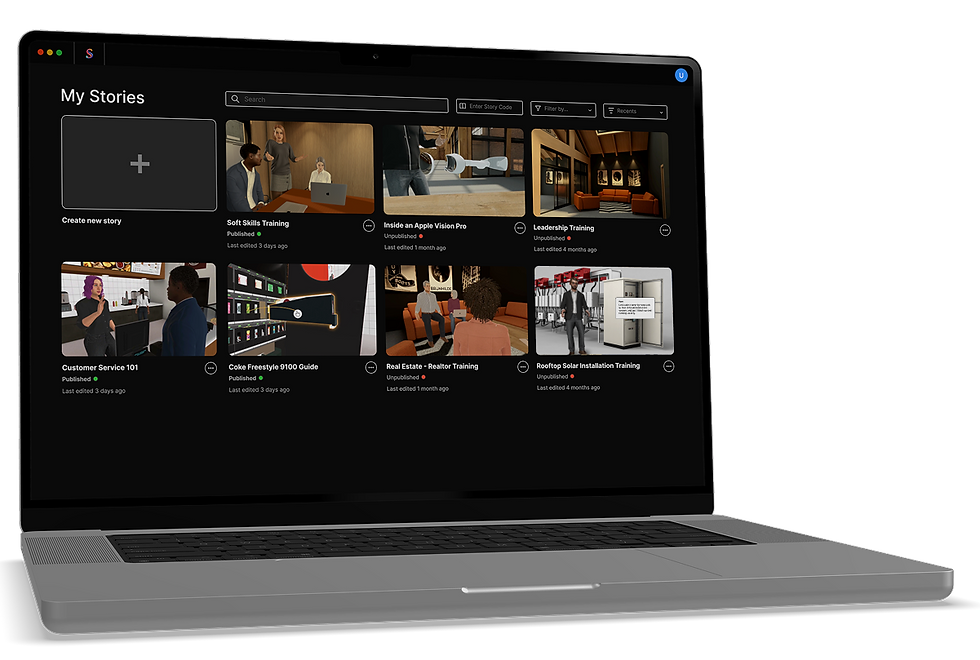
We build custom learning modules directly relevant to your team’s roles. By using interactive 3D environments, we move beyond passive observation to active skill mastery, ensuring employees can seamlessly apply new skills on the go.
How does VITE ensure maximum knowledge retention?

Our training solutions are built on a privacy-forward, GDPR-compliant foundation. We combine quick revision turnarounds with an unwavering commitment to data protection to keep your industrial projects and operations on track.
How do we protect your data while maintaining speed?
.png)
Go beyond completion rates. Our tailored dashboards provide a real-time view of your workforce's learning journey, tracking competency, error rates, and time-to-proficiency.
What metrics can I track with a VITE analytics dashboard?


Backed By A Team of Training & Technical Experts
We create engaging training experiences by combining our expertise in Research, Human-Centered Design, and Engineering. This powerful approach allows us to deliver solutions that are not only deeply immersive but are also precisely tailored for the unique demands of manufacturing, assembly, and other technical disciplines.
© 2026 by D2Bridge LLC.
