Ground support equipment design.
D2Bridge designs ground support and airport equipment that ramp crews can trust: rugged, simple to operate and practical to manufacture. We take ideas from first concept to a tested proof of concept, working alongside your engineers.
Discuss your equipment →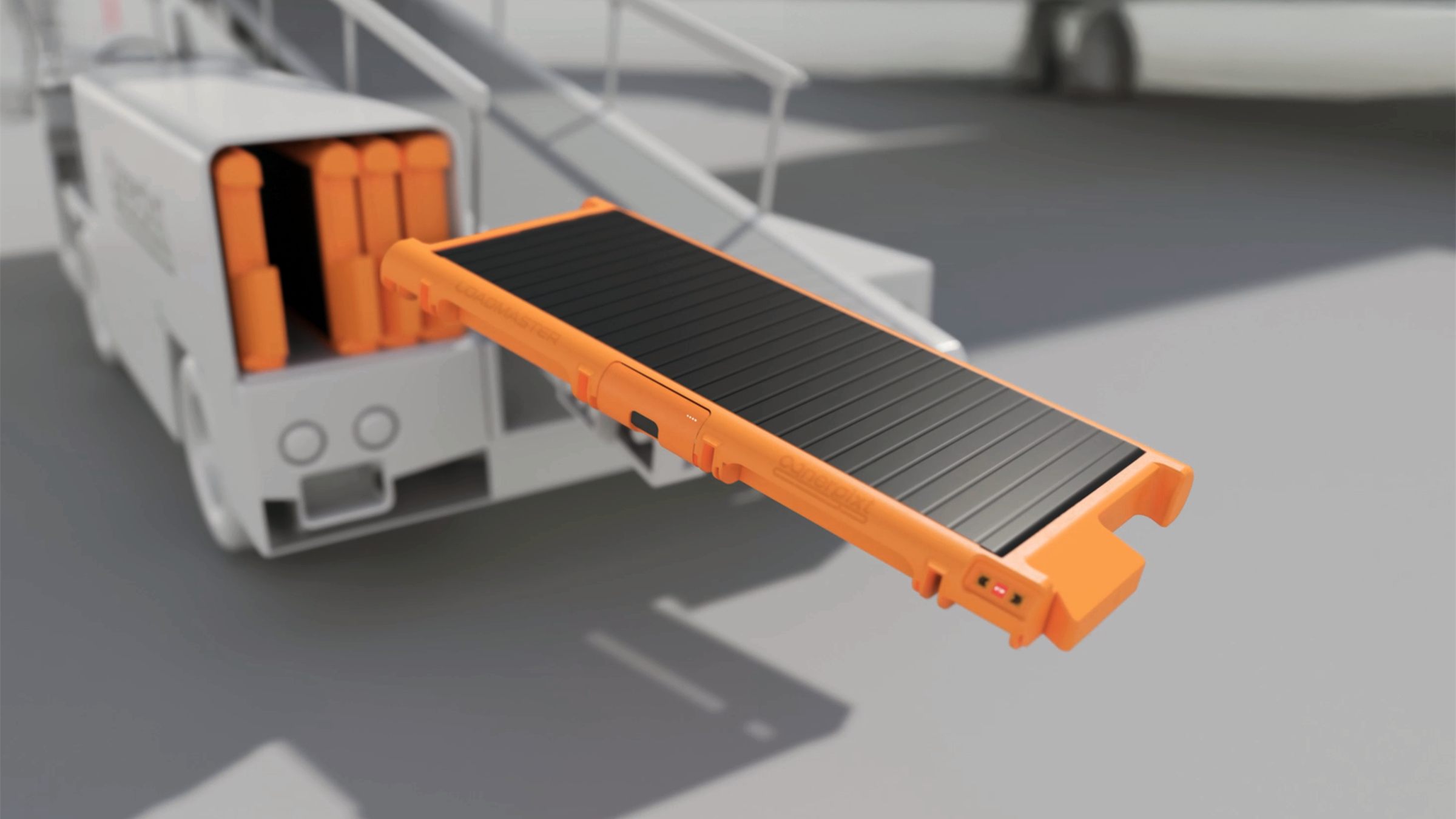
- Scope
- Concept · Proof of concept · DFM
- Equipment
- Cargo · Baggage · Ramp · Airport
- Fit
- B737 · A320 · E-Jet holds
- Recent
- LOADSTERS (former Cynergixt)
- Studio
- Bothell, WA · Seattle area
Built for the ramp.
Ground support equipment works in rain, cold, noise and darkness, against a turnaround clock, often in the hands of new hires. It gets bumped, dropped and hosed down, and every minute an aircraft waits on the ground costs money.
That makes GSE design a human-factors problem as much as an engineering one. Controls must be obvious with gloves on, weights must suit the people who lift them, and the equipment must fit the aircraft, vehicles and procedures that already exist. We design for all of it, and we design for manufacturing from the start, so a good concept stays affordable to build.
Cargo & baggage handling
Conveyors, loaders and handling aids that move bags and cargo with less lifting and less strain on crews.
HandlingRamp vehicles & carts
Specialty vehicles, carts and operator stations for ground crews, with clear sightlines and controls.
VehicleControls & status
Buttons, lights and displays that read at a glance in a noisy, dark or wet environment. See HMI design.
HMIEnclosures & housings
Rugged housings that protect electronics, survive daily handling and stay easy to service.
EnclosureProof of concept
Working prototypes, built and tested to prove the idea before anyone pays for tooling.
PoCCrew training
Digital-twin training, so crews learn new equipment before it reaches the ramp.
VITE →Bags to the back of the hold, powered.
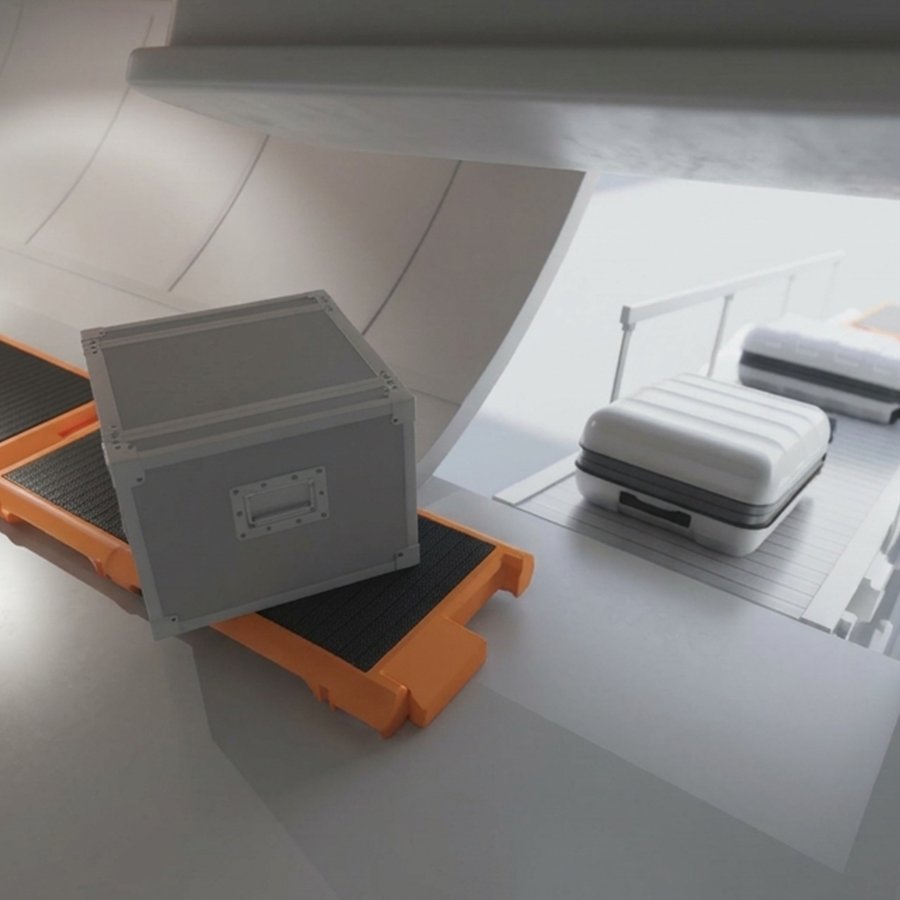
In a narrow-body cargo hold, bags arriving at the door are usually moved to the back by hand, often by handlers working on their knees. LOADSTERS asked us to change that.
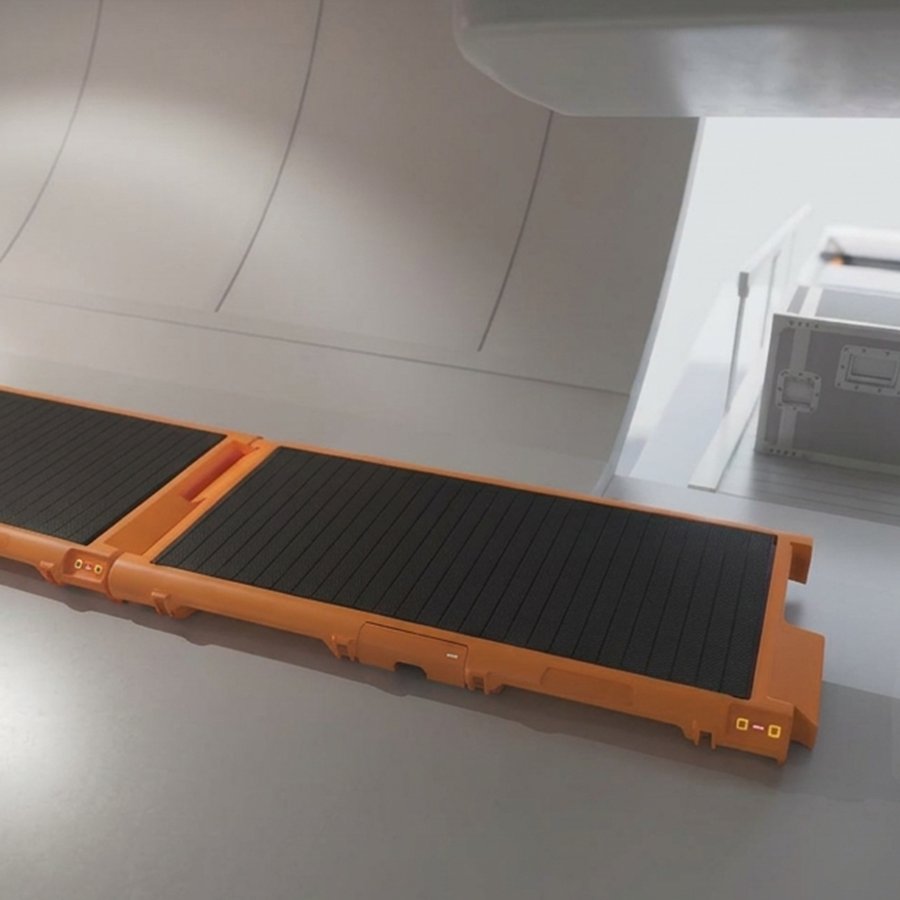
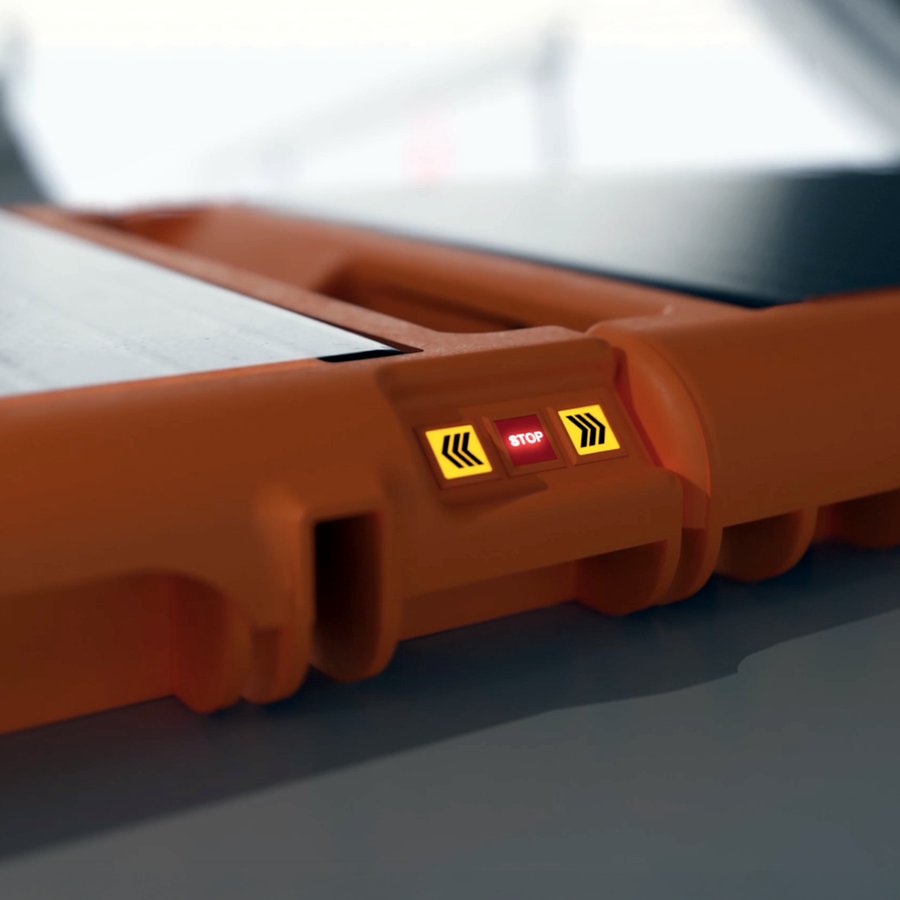
We developed the product concept for portable conveyor modules that ride with the belt loader, go up through the cargo door and snap together into a powered line along the hold floor. Each module carries up to 150 lb, has simple forward, stop and reverse controls, and works with most belt loaders and with B737, A320 and E-Jet holds.
Then we designed and tested the systems proof of concept: a working prototype, wired to test electronics on the bench, that showed the idea works before production design began.
- Load
- Up to 150 lb per module
- Aircraft
- B737 · A320 · E-Jet
- Controls
- Forward · Stop · Reverse
- Delivered
- Concept · Tested proof of concept
- Role
- Design agency
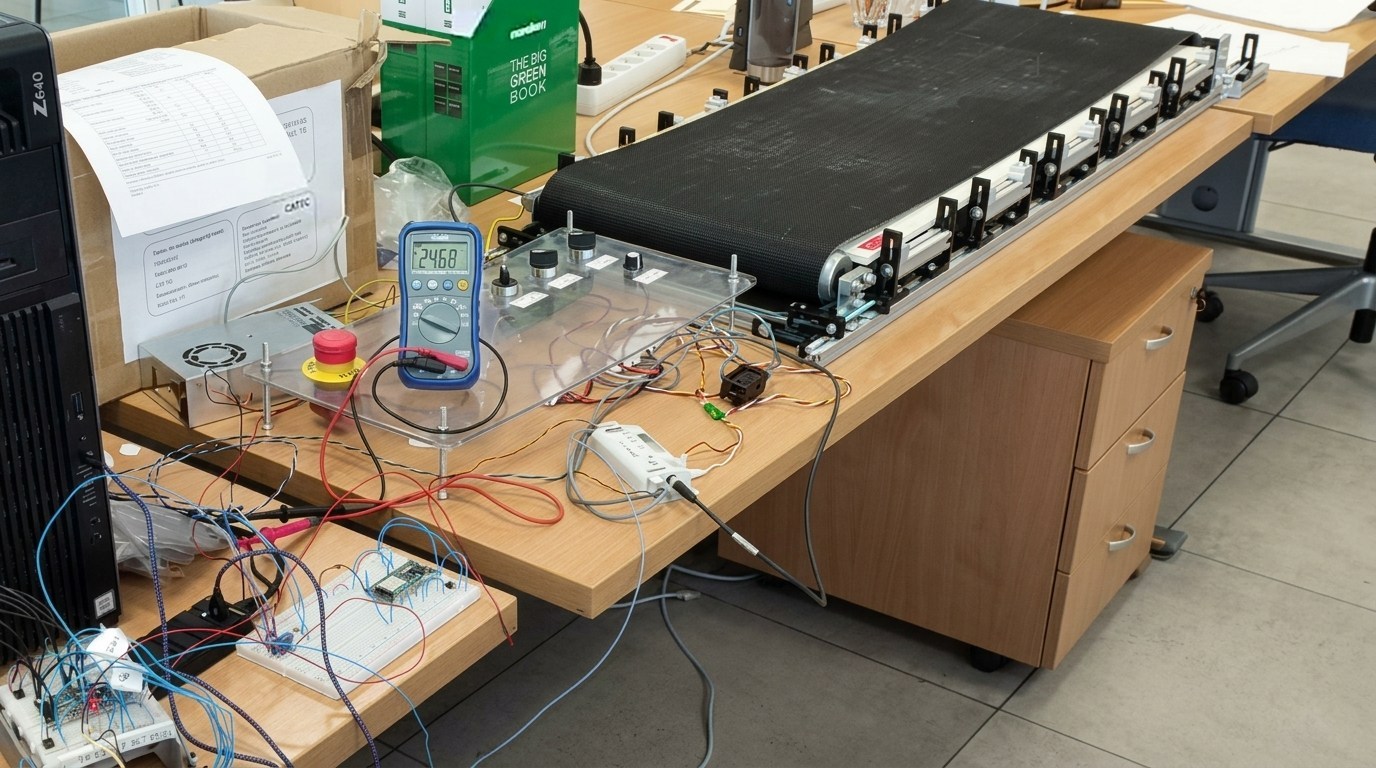
Tough equipment, clear design.
The same approach runs through our other equipment work. We designed a modular zero-emission backup power system with controls and status at eye level, and the enclosures and system UI for Phinergy's Aluminum-Air Generator, whose 72 kW / 1.4 MWh module was tested for data centers in October 2026.
We bring aerospace rigor to the ramp and the hangar floor: co-founder Konstantin Ziman was previously Head of Design at Eviation Aircraft. See all industries we serve.
Understand
Time with ramp crews, the aircraft and vehicles involved, and your safety and operating rules.
Experience
Every step of the task mapped, from setup to stowage, to find where time, effort and strain go.
Form
Concepts, ergonomics and CMF for a product that is obvious to use and tough enough for daily service.
Realize
Proof-of-concept prototypes, testing and design for manufacturing, handed over to your engineering team.
Common questions
More in the services FAQ
What does industrial design add to ground support equipment?
Industrial design makes equipment easier and safer to use, faster to learn and cheaper to build. For ground support equipment that means controls that work with gloves on, weights and handles that suit the crew, a good fit with existing aircraft and vehicles, and parts designed for manufacturing and maintenance.
Can you take a GSE idea to a working prototype?
Yes. For LOADSTERS (former Cynergixt) we developed the product concept, then designed and tested the systems proof of concept, a working conveyor prototype, before production design began.
Can you design equipment to fit specific aircraft?
Yes. The LOADSTERS conveyor modules were designed to work with most belt loaders and with B737, A320 and E-Jet cargo holds. We size equipment around the aircraft, vehicles and procedures you already use.
Do you handle design for manufacturing?
Yes. Design for manufacturing (DFM) is a D2Bridge specialty. We work alongside your engineers and suppliers to cut material waste and assembly time, and hand over designs ready for engineering.
Can you also help train crews on new equipment?
Yes. Our VITE digital-twin training lets crews practice setup, operation and maintenance on any device before the equipment reaches the ramp.